




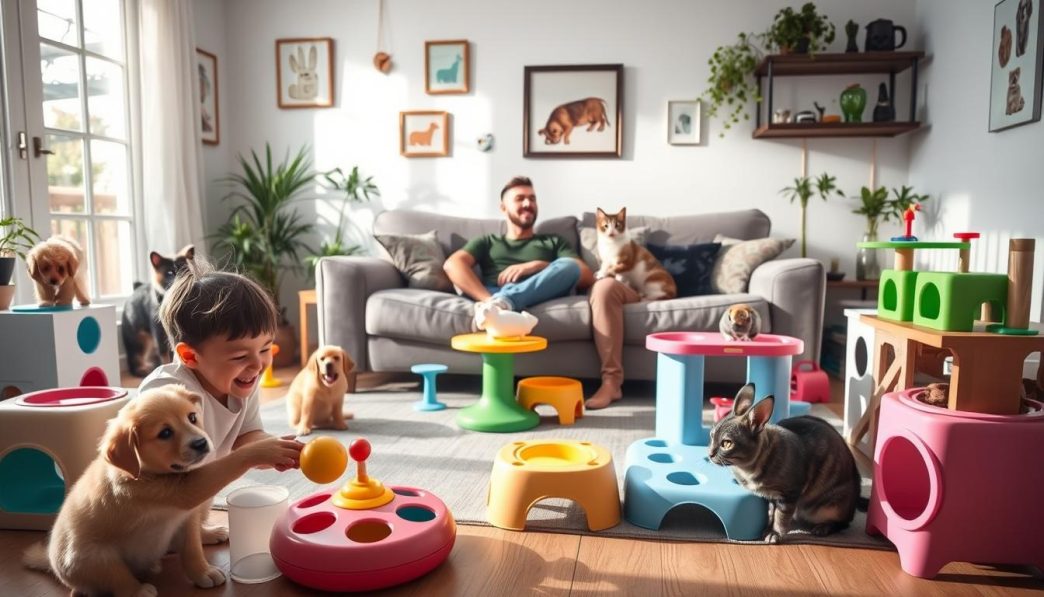
Modern animal care in the United States has evolved significantly, moving far beyond simple food and shelter. Today, we recognize that mental stimulation is just as vital as physical health for our companions. By focusing on pet enrichment, owners can effectively prevent common behavioral issues caused by boredom.
Creating a dynamic home space allows your animal to express natural instincts in a safe way. When you provide interactive challenges, you help reduce stress and anxiety. This proactive approach leads to a much happier and more balanced life for your furry friend.
Our guide will show you how to transform your living area into an engaging playground. Implementing consistent pet enrichment strategies is the best way to foster a deeper bond. Let’s explore how small changes can make a massive difference in your companion’s daily quality of life.
Key Takeaways
- Mental stimulation is essential for overall animal wellness.
- Proactive engagement helps prevent destructive boredom.
- Natural instincts can be nurtured through interactive home environments.
- Reducing stress improves the long-term health of your companion.
- Small, consistent changes create a more fulfilling daily experience.
Main Section 1: Understanding Pet Enrichment
True happiness for a household pet often stems from the daily opportunities they have to engage their natural instincts. While providing food and shelter is essential, these basics only cover the physical survival of your companion. To truly help them thrive, you must look at the environment through their eyes.
What is Pet Enrichment?
At its core, pet enrichment is the practice of providing environmental stimuli that encourage natural behaviors. This might involve setting up DIY pet activities that mimic hunting or foraging in the wild. By introducing these elements, you allow your pet to express their innate traits in a safe and controlled home setting.
Whether you have a dog, cat, or small mammal, the goal remains the same. You want to create a space that challenges their mind and body. This process often includes the use of interactive toys that require problem-solving skills to unlock a reward.
Benefits of Enrichment
The advantages of a structured enrichment program go far beyond simple entertainment. Regular engagement significantly improves the mental health and cognitive development of your pets. When animals are mentally stimulated, they are less likely to develop destructive habits born out of boredom or anxiety.
Incorporating sensory exploration into their daily routine helps keep their senses sharp and their spirits high. Furthermore, consistent pet exercises ensure that your companion maintains a healthy weight and strong muscles. A balanced routine creates a calmer, more confident animal that is better equipped to handle new situations.
| Feature | Basic Care | Enrichment Focus |
|---|---|---|
| Primary Goal | Survival | Thriving |
| Daily Activity | Feeding/Resting | Problem Solving |
| Outcome | Maintenance | Cognitive Growth |
| Key Tools | Bowls/Bedding | Puzzles/Games |
The Science Behind Enrichment
Scientific research shows that animals require more than just basic comfort to maintain optimal brain function. In the wild, animals spend a large portion of their day searching for food and navigating their surroundings. When we remove these challenges, we inadvertently create a deficit in their natural behavioral cycles.
By reintroducing these challenges through pet enrichment, we trigger the release of dopamine and other feel-good chemicals in the brain. This biological response is crucial for long-term emotional stability. Understanding these needs allows you to tailor your home environment to support the specific biological requirements of your pet.
Main Section 2: Interactive Toys and Games
You can transform your home into a playground with the right tools and a little creativity. Providing consistent mental stimulation is essential for your pet’s long-term health and happiness. By incorporating various forms of play, you ensure your companion stays sharp and satisfied throughout the day.
Choosing the Right Toys
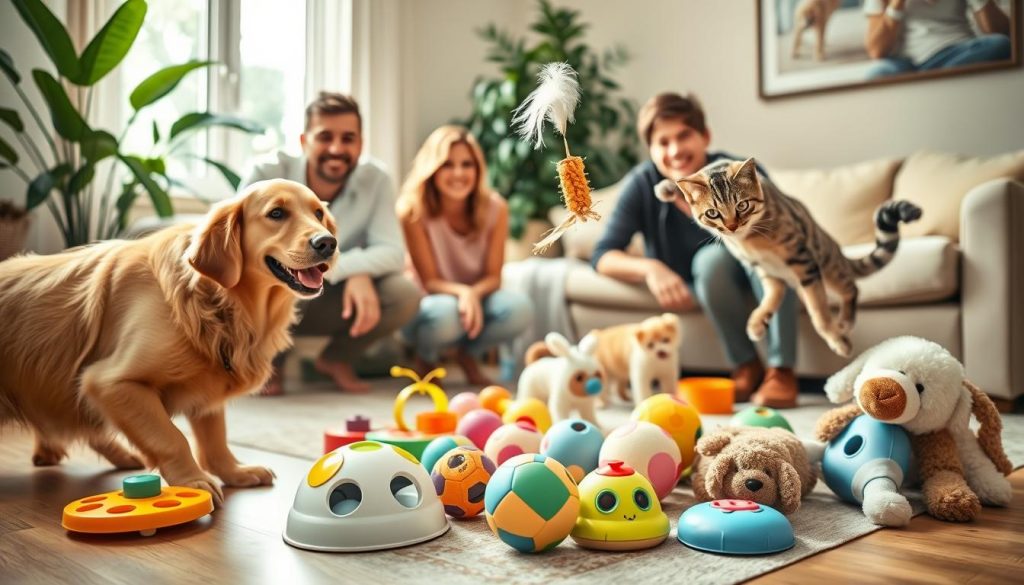
Selecting the best interactive toys depends heavily on your pet’s unique personality and breed traits. For heavy chewers, look for durable rubber or nylon materials that can withstand significant pressure. Always prioritize safety by checking for small parts that could pose a choking hazard.
Consider the size of your pet when making a purchase. A toy that is too small might be swallowed, while one that is too large could be frustrating to manipulate. Matching the toy to your pet’s natural instincts, such as chasing or fetching, will maximize the value of your pet enrichment efforts.
DIY Enrichment Games
You do not need to spend a fortune to keep your furry friend entertained. Many effective DIY pet activities can be created using simple household items you already own. For example, hiding treats inside a folded towel or a cardboard box encourages your pet to use their nose and problem-solving skills.
These homemade games are perfect for rainy days when outdoor exercise is limited. Always supervise your pet during these sessions to ensure they do not ingest any non-food items. Creativity is the only limit when designing these low-cost challenges for your companion.
Engaging Your Pet with Puzzle Toys
Puzzle toys are excellent tools for challenging your pet’s cognitive abilities. These devices require your pet to slide, flip, or rotate components to reveal hidden rewards. When introducing these interactive toys, start with the easiest setting to build your pet’s confidence.
Gradually increase the difficulty as your pet masters each level of the puzzle. This progressive approach keeps the experience rewarding rather than frustrating. Consistent use of these tools is a cornerstone of effective pet enrichment, helping to prevent boredom and destructive behaviors at home.
Main Section 3: Sensory Exploration for Pets
Beyond simple play, sensory exploration offers a unique window into your pet’s natural world. By focusing on sight, smell, and sound, you can provide a deeper level of pet enrichment that satisfies their primal instincts. This approach helps animals feel more connected to their surroundings while reducing stress and boredom.
Creating a Sensory Garden
A sensory garden is a fantastic way to let your pet experience nature in a controlled, safe environment. You can plant pet-safe herbs like rosemary, catnip, or lavender to provide a variety of interesting scents. Adding different textures, such as smooth river stones, soft patches of grass, or wooden logs, allows your pet to explore with their paws and nose.
Safety is the top priority when designing these spaces. Always ensure that all plants are non-toxic and that the area is free from harmful chemicals or pesticides. A well-planned garden encourages your pet to investigate at their own pace, which is essential for their mental well-being.
The Role of Scavenger Hunts
Scavenger hunts are an excellent method to encourage natural foraging behaviors in both dogs and cats. Instead of serving meals in a bowl, try hiding small portions of dry food or treats around your home or yard. This simple change forces your pet to use their keen sense of smell to locate their reward.
This activity turns a mundane mealtime into an exciting adventure. It keeps their mind sharp and provides a sense of accomplishment once they find their hidden treasure. You will notice that your pet becomes more focused and engaged when they have to work for their food.
Utilizing Different Environments
To keep your pet curious, it is important to rotate through different environments regularly. Animals can easily become habituated to the same indoor or outdoor spaces, which leads to a lack of interest. By introducing new locations, you provide fresh sights and sounds that keep their brain active.
Even small changes, such as taking a different route during your daily walk or rearranging furniture, can make a big difference. Variety is the key to preventing stagnation in your pet’s routine. Consistently offering new experiences ensures that your companion remains happy, healthy, and eager to learn.
Main Section 4: Physical Activities for Enrichment
Physical movement does more than just burn calories; it keeps your pet mentally sharp and emotionally balanced. Regular activity is vital for maintaining a healthy weight and releasing pent-up energy that might otherwise lead to destructive behavior. By prioritizing pet enrichment through movement, you ensure your companion stays vibrant and happy.
Outdoor Games and Exercises
Outdoor play offers the perfect backdrop for high-energy fun. You can tailor pet exercises to suit your animal’s specific age, breed, and fitness level. For younger, active dogs, a game of fetch or a brisk hike provides excellent cardiovascular benefits.
Older pets or those with lower stamina may prefer gentle walks or scent-based exploration in a secure yard. Consistency is key when building a routine that supports long-term health. Always observe your pet’s body language to ensure they are enjoying the activity without becoming overly fatigued.
Indoor Physical Challenges
When the weather turns sour, you do not have to sacrifice your pet’s daily movement. Creative DIY pet activities can turn your living room into an engaging obstacle course. Using household items like pillows, boxes, and tunnels allows you to create challenges that keep your pet moving in limited space.
These indoor pet exercises are perfect for fostering a stronger bond through shared play. You might try hiding treats around the room to encourage active searching or using a laser pointer for cats to stimulate their natural hunting instincts. These simple, structured sessions provide the mental and physical stimulation your pet craves.
| Activity Type | Best For | Intensity Level | Space Required |
|---|---|---|---|
| Fetch | High-energy dogs | High | Large/Outdoor |
| Obstacle Course | Agile pets | Medium | Indoor/Small |
| Scent Games | All ages | Low | Any |
| Tug-of-War | Strong breeds | Medium | Indoor |
Conclusion
Your journey toward a more vibrant life for your pet starts with small, intentional changes. A holistic approach to pet enrichment transforms daily routines into meaningful experiences that strengthen your bond.
Consistency remains the secret to long-term success. Dedicate time each day to introduce new challenges that keep your companion sharp and eager to learn. Variety prevents boredom and ensures your pet stays physically fit and mentally stimulated.
Brands like Kong and Outward Hound offer excellent tools to support these goals. Use these resources to build a diverse program tailored to the specific personality of your animal. Observe how your pet responds to different puzzles and games to refine your strategy over time.
Start your enrichment journey today by picking one simple activity to try this afternoon. Watch your pet thrive as you provide the mental and physical outlets they crave. Your commitment to their well-being creates a happier home for everyone involved.